BMX Cycle Extreme Bicycle Game
PlayFlixRacing
4.6183.00 Reviews
- Version
- 3.3.8
- Installs
- 50.00M
- Age Rating
- Teen
Screenshots
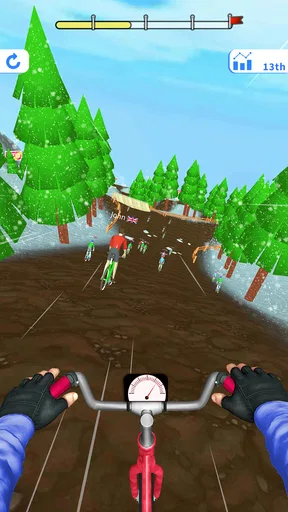
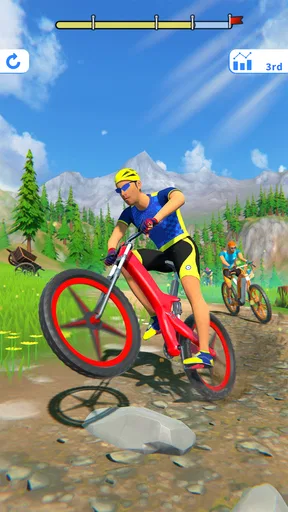
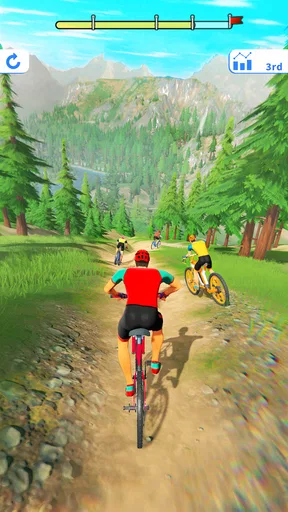
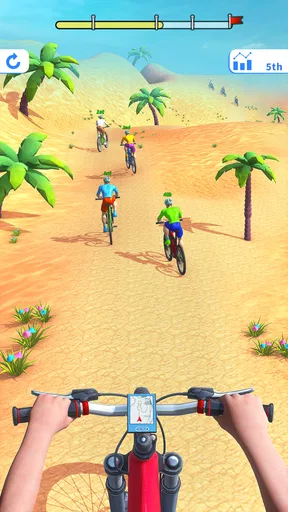
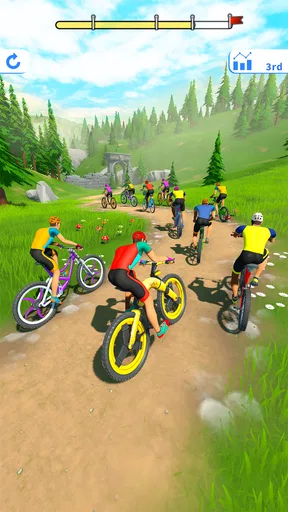
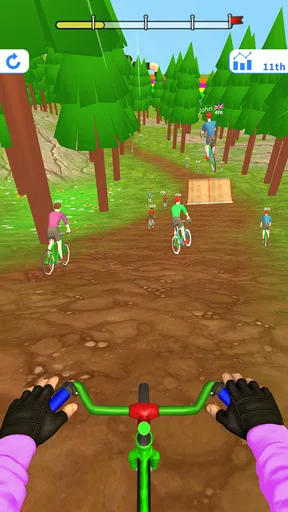
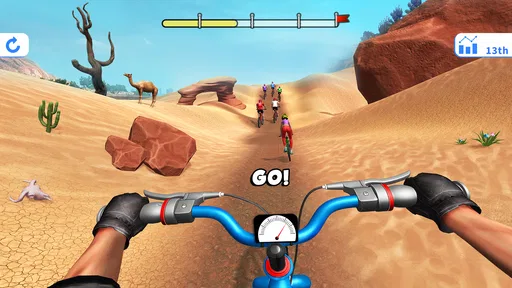
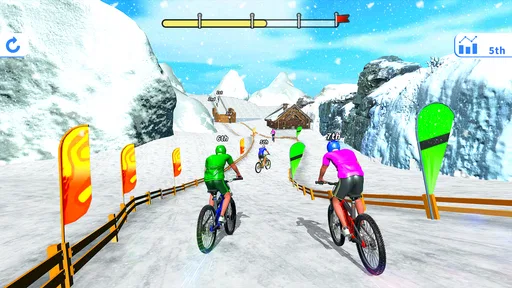
Our Review of BMX Cycle Extreme Bicycle Game
 Analysis by Appyee
I spent time with BMX Cycle Extreme Bicycle Game as a quick-play racing game built around bicycle stunts, narrow tracks, and the constant risk of turning a clean run into a crash. Its appeal is easy to understand: you guide a BMX rider through exaggerated courses, look for the safest line, and try to keep enough control to reach the finish. It is free to download, aimed at Teen players, and developed by PlayFlix.
What makes it worth discussing is not just the stunt theme. The game sits in a familiar part of mobile racing where success depends less on long sessions and more on repeating short attempts until your timing improves. I found that the most satisfying moments came from learning a troublesome section rather than simply moving forward. That also creates the main question for anyone considering it: does the challenge feel fair, and does the game remain enjoyable when progress starts demanding patience?
How the BMX challenge feels in everyday play
The basic idea is straightforward, but the track design gives it more tension than a normal point-to-point race. A bicycle has little room for error on an impossible-looking course. A jump taken too early can leave you short, while a landing with the wrong angle can send the rider away from the route. I quickly stopped treating each level as a race against an opponent and started treating it as a sequence of small technical problems.
That change in mindset is important. If you approach every obstacle by holding the controls aggressively, the game can feel unpredictable. If you watch the shape of the track and make smaller corrections, the same sections become easier to read. My practical advice is to use the first attempt as a scouting run. Instead of chasing speed immediately, note where the track narrows, where a landing needs extra care, and where a jump gives you very little time to recover.
This makes the game a good fit for short breaks. I can imagine opening it while waiting for transport, playing a few attempts, and closing it without needing to remember a complicated story or a large collection of systems. It also suits players who like retry-based games, especially those who enjoy the small satisfaction of turning a failed jump into a successful one through better timing.
It is less suitable if you want a relaxed cycling game or a realistic racing simulator. The premise is deliberately exaggerated, and the enjoyment comes from surviving dramatic tracks rather than reproducing the feel of an actual bicycle ride. Players who prefer smooth touring, detailed vehicle tuning, or long competitive races may find the compact stunt format too narrow.
Learning the controls instead of fighting them
The first useful habit is to separate steering from speed in your mind. Even when a section looks like it rewards rushing, preserving a stable approach is usually more valuable than arriving at an obstacle quickly. I found that a controlled entry often made the landing easier, while a hurried approach created a second problem immediately after the first jump.
Another helpful approach is to focus on the landing before the takeoff. New players naturally look at the ramp in front of them, but the real danger is often the surface waiting on the other side. Reading that destination early gives you more time to prepare the bicycle. This is one of the game’s less obvious lessons: the obstacle is not only the jump itself; it is the transition back to the track.
When a run fails, repeating it immediately is not always the best choice. I got better results by identifying one specific mistake before trying again. Was the approach too fast? Did I overcorrect in the air? Did I land safely but enter the next turn badly? Treating each attempt as a small experiment makes the difficulty feel more manageable and avoids the frustration of repeating the same error without learning anything.
That workflow also reveals a trade-off. The game can provide a satisfying sense of mastery when a difficult sequence finally works, but it may feel repetitive to anyone who expects every retry to introduce something new. The pleasure is in refinement. If you do not enjoy practicing the same section several times, the central loop may lose its appeal quickly.
Progress, pressure, and the cost of a mistake
Progress in this kind of racing game is naturally built around pressure. A failed attempt costs time and interrupts the feeling of momentum, even when the actual course is short. I noticed that my attitude changed depending on whether I was trying to finish or trying to improve. Finishing encouraged caution; improving encouraged experimentation. Switching between those goals helped prevent every run from feeling like a test I had to pass.
For a realistic everyday scenario, imagine playing after work when you have only ten minutes. The game is easy to pick up, but a difficult track can tempt you into using the entire break on one sequence. I would recommend setting a personal stopping point before starting. Give yourself a handful of attempts, and if the same obstacle still feels irritating rather than interesting, leave it and return later. This keeps the challenge from turning a short diversion into an unwanted source of stress.
The game’s free price lowers the barrier to trying it, which is useful for curious players who do not want to commit money before understanding the control style. At the same time, free-to-play racing games can create questions about how progress and spending interact. Here I would keep expectations practical: the confirmed purchase context is that the game is free to download, while specific purchase details are not something I would use to promise a particular progression experience.
That distinction matters. I would not tell a friend that spending is necessary, nor would I claim that the game is completely free of pressure from optional purchases without seeing a clear purchase structure in the version being played. The fair conclusion is narrower and more honest: you can begin without paying, but your decision about spending should depend on what the in-game experience actually presents on your device.
Is the challenge competitive or mainly personal?
The strongest form of competition here is personal improvement. You are mainly competing with your previous attempt, your memory of the track, and your ability to make a cleaner sequence of movements. That can be more welcoming than a direct multiplayer race because a beginner is not immediately placed against someone with much more practice.
It also means the game should be judged differently from a racing title built around live opponents, rankings, or detailed vehicle setups. I would not choose this BMX experience if my priority were proving that my bike build is stronger than another player’s or studying a large competitive meta. Its value is in the physical puzzle of the course, not in a broad social contest.
From a fairness perspective, the important question is whether failure feels connected to a decision you made. In my experience, the most enjoyable attempts were the ones where I could explain the result: I approached too quickly, corrected too late, or ignored the landing. That kind of clarity supports fair-feeling difficulty. When a crash seems to happen without a readable cause, frustration rises much faster.
A useful fairness test is to play the same obstacle with two different approaches. Try a fast line once, then a cautious line. If the cautious route gives you a realistic chance to recover, the course feels more like a problem to solve than a pure reflex check. This is also a good way to decide whether the game suits you. Players who enjoy testing routes will find more depth than players who only want to hold a button and watch the rider clear everything.
Compared with conventional arcade racers, the game trades vehicle variety and head-to-head excitement for precision on a single bicycle. Compared with realistic BMX games, it places spectacle and impossible track layouts ahead of simulation. Those comparisons make its audience fairly clear: it is for someone who wants compact stunt challenges, not a complete cycling career or a serious racing league.
What I would check before committing to longer play
The current version is 3.3.6, and the game supports devices running Android 7.0 or later. That makes compatibility a practical consideration for anyone using an older phone or tablet. I would check the operating system before planning to install it, especially on a device that has been kept for several years. A game that looks appealing is not useful if the hardware cannot run it comfortably.
The audience size suggests that this is not an obscure experiment. It has passed 50 million installs and holds a 4.6 average from roughly 159 thousand ratings. Those figures tell me that many people have been willing to try it, but they do not replace personal testing. A high average can indicate broad appeal while still hiding a mismatch for someone who dislikes retry-heavy controls.
The game was released on November 23, 2023, and its Teen content rating is another reason I would consider the intended audience before handing it to a younger child. The rating should be treated as a prompt to review the experience together rather than as a guarantee that every family will view it the same way. For teenagers and adults looking for an arcade stunt game, the label is consistent with the tone implied by the extreme track concept.
There are also a few unknowns that I would not fill with guesses. I would not promise a particular number of bikes, describe a specific upgrade system, or claim that every mode works offline unless the version on your device clearly shows those things. I would also avoid assuming that the free download means every later element is free. For a purchase decision, the sensible approach is to install it, inspect the early experience, and decide whether any optional spending is clearly explained and genuinely useful to you.
That caution is not a criticism by itself. It is simply good practice with any free mobile game. What matters is whether the game lets you understand its core controls and challenge before asking for commitment. If the opening sessions already provide enough enjoyment without pressure, the free entry point has done its job. If the experience quickly becomes more about prompts and interruptions than riding, I would move on rather than spend just to force the game into a better shape.
Who should try it, and who should skip it?
I would recommend this game to players who enjoy short arcade sessions, stunt-focused racing, and the satisfaction of mastering awkward jumps. It is especially appealing if you like games where the solution is partly visual: observe the track, choose a line, adjust your timing, and repeat. It can also work for someone who wants a simple game to play in small bursts without learning a complicated story or a large set of menus.
I would be more cautious about recommending it to players who become annoyed by repeated failure. The game’s central appeal depends on retrying, and that structure does not become a flaw only because the graphics or premise are entertaining. If you need constant novelty, deep customization, or a strong multiplayer focus, a broader racing game would probably be a better use of your time.
Parents should also consider the Teen rating and the way frustration can affect younger players. The game is not something I would present as a calm educational activity. It is a challenge game, and the right fit depends on whether the player can treat crashes as feedback rather than as a reason to keep playing angrily.
My trust verdict after weighing the trade-offs
My overall view is positive but focused. PlayFlix has built a racing game around a clear idea: make the track the opponent and make every landing matter. That focus gives BMX Cycle Extreme Bicycle Game its best quality. It is easy to understand, quick to start, and capable of producing genuine satisfaction when a difficult sequence finally becomes consistent.
The free download and broad reach make it reasonable to try, while the 4.6 average and more than 159 thousand ratings suggest that the concept has connected with a substantial audience. I would still treat those figures as context rather than a promise. The deciding factor is your tolerance for repetition and your preference for stunt precision over traditional racing depth.
My recommendation is to try it as a short-session challenge, not as a complete racing simulator. Start cautiously, study landings, and judge the game by whether your failures feel understandable. If you enjoy improving one section at a time, it can become a surprisingly absorbing BMX diversion. If you want open-ended riding, extensive tuning, or clearly defined competitive systems, choose a different racing game instead. Its strongest form is narrower than the category as a whole, but within that narrow lane, the game knows what it wants you to do: ride carefully, learn from the crash, and earn the next clean run.
Privacy and Permissions
See what permissions an app requests and how it handles your data.
- Wi-Fi connection information
- view Wi-Fi connections
- Other
- view network connections, full network access, control vibration, prevent device from sleeping, Google Play license check
Verdict
Strengths of BMX Cycle Extreme Bicycle Game
- Simple controls make it easy for beginners to start riding.
- Short levels are convenient for quick gaming sessions.
- Ramp designs encourage experimenting with jumps and tricks.
- Offline play is useful when you have no internet connection.
- Bright visuals make obstacles and tracks easy to recognize.
Limitations of BMX Cycle Extreme Bicycle Game
- Repeated track layouts can make the experience feel predictable.
- Precision landings may be frustrating on smaller phone screens.
- The game offers limited depth for players seeking advanced BMX physics.
- Some devices may experience occasional frame-rate drops.
- Progression can feel slow without replaying earlier levels.
Similar Picks in This Category
View All
Hill Climb Racing
Fingersoft4.3

Dr. Driving
SUD Inc.4.2

Traffic Rider
skgames4.5

Asphalt 8 - Car Racing Game
Gameloft SE4.6

Race Master 3D: Car Racing
Beresnev Games4.6

Extreme Car Driving Simulator
AxesInMotion Racing4.3
Frequently Asked Questions
What is BMX Cycle Extreme Bicycle Game?
BMX Cycle Extreme Bicycle Game is an action and stunt-riding game focused on performing bicycle tricks across challenging tracks. Players control a BMX rider, navigate ramps and obstacles, complete jumps, and try to achieve high scores. The game is designed for short, entertaining sessions and generally appeals to users who enjoy arcade-style cycling gameplay rather than realistic bicycle simulation.
How do you play BMX Cycle Extreme Bicycle Game?
Gameplay usually involves using on-screen controls to accelerate, steer, balance the BMX bike, jump over obstacles, and land safely. Each level requires timing and control, especially when approaching ramps or performing stunts. New players may need a few attempts to understand the physics and button layout, but the basic controls are relatively easy to learn once you become familiar with the bike’s momentum.
Does BMX Cycle Extreme Bicycle Game work offline?
The game may support offline play for its main levels, which is useful when you are traveling or do not have a stable internet connection. However, certain features such as advertisements, optional rewards, updates, leaderboards, or promotional content may require internet access. It is best to launch the game once while connected and check which modes remain available after switching off Wi-Fi or mobile data.
Is BMX Cycle Extreme Bicycle Game free to download?
BMX Cycle Extreme Bicycle Game is generally offered as a free download, allowing players to install and try the core gameplay without paying in advance. Free versions may include advertising or optional in-game purchases, depending on the platform and current release. Before downloading, review the store listing for pricing details, permissions, age guidance, advertisements, and any available purchase information.
What devices are compatible with BMX Cycle Extreme Bicycle Game?
Compatibility depends on the version available for Android or iOS and the requirements specified by the developer. Most modern smartphones and tablets should be able to run this type of arcade BMX game, although performance can vary on older devices. Check the official app-store page before installing to confirm the required operating-system version, available storage, and whether your device is supported.
Play our best games!


